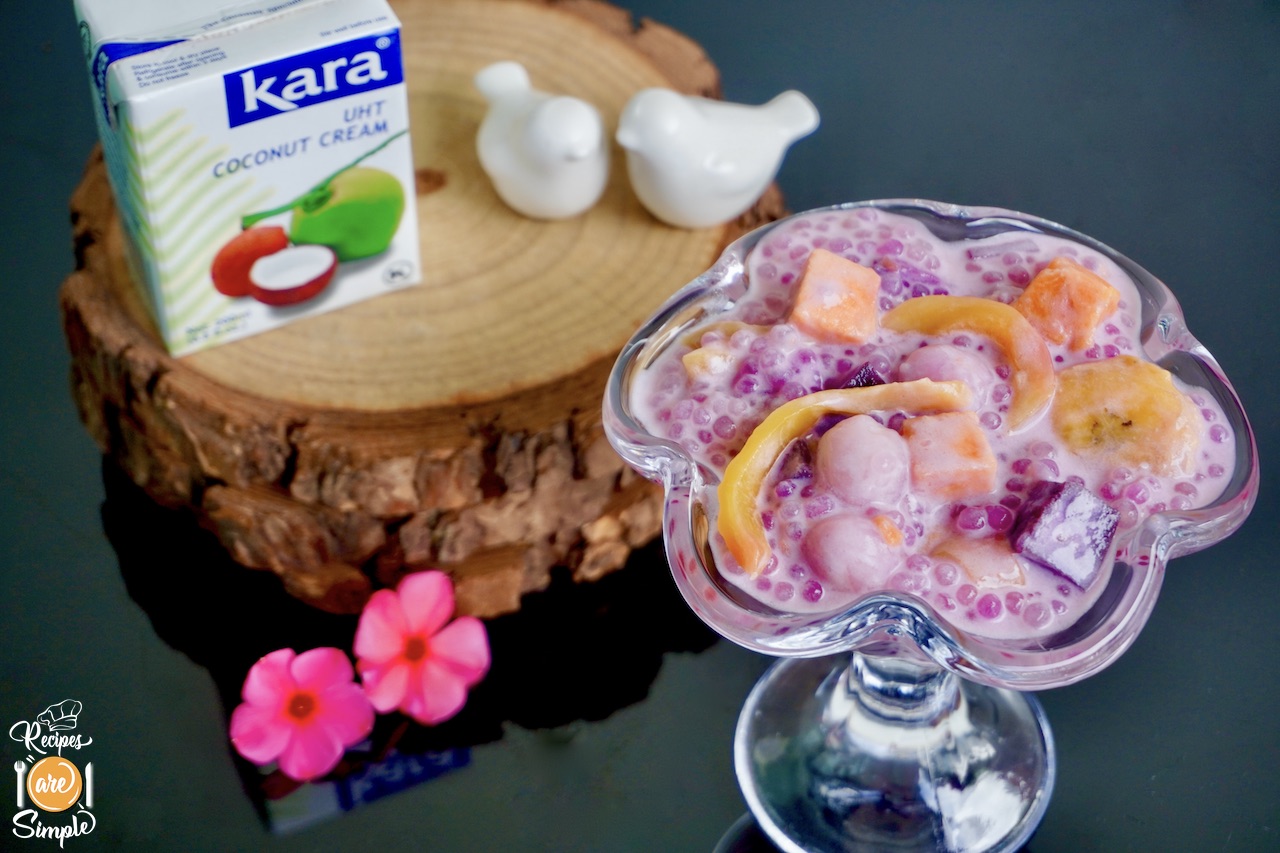
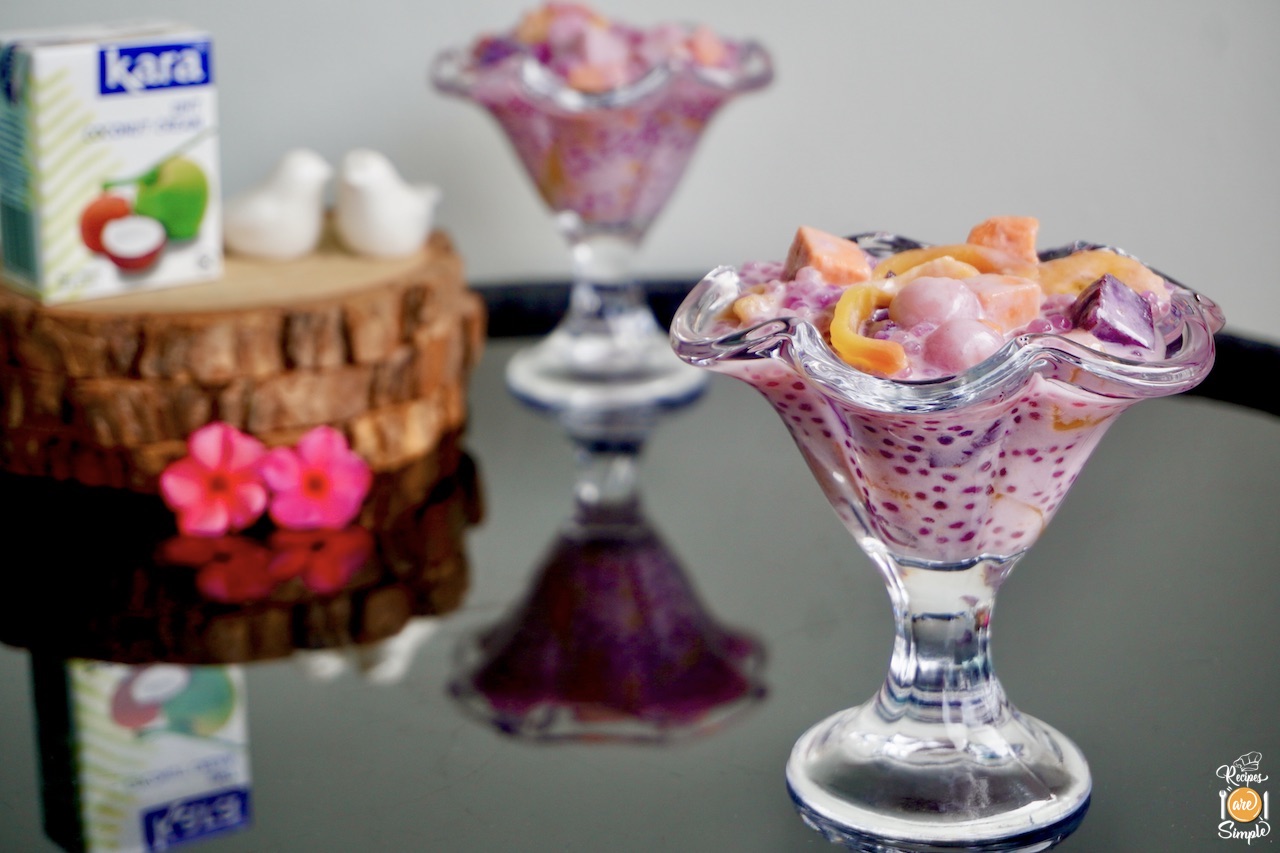
Ginataang Bilo-Bilo is a beloved Filipino dessert soup. It is warm, creamy, and packed with a variety of textures. It is often served for merienda (afternoon snack) or as a comforting treat on rainy days.
The name comes from Ginataang (cooked in coconut milk) and Bilo-bilo, which refers to the small, chewy balls made from glutinous rice flour. The main ingredients are root crops, fruit, sago pearls, and bilo bilo in a base of sweetened coconut cream.
Ginataang Bilo Bilo
® This is a RAS signature Recipe©
♦Prep time:20min ♦Cook time:25min ♦Yield:6-8Servings.
A detailed introduction and related links are available on the
Recipe Intro ↓ : Check it out or scroll down for the Recipe and Video⇓.

EAT AND TELL!!! Let us know if you tried– Ginataang Bilo Bilo (Filipino Dessert)
| ♦Mail me your pics and testimonials 🙂 – recipesaresimple@gmail.com ♦If you make the dish and share it on your social media, please don’t forget to tag me @recipesaresimple and hashtag it #recipesaresimple on any platform. ♥Please rate the recipe if you have tried it below ↓♦Quick Browse to see All Recipes by Category.♦World Cuisines to browse recipes by Country. ♥Thanks for visitingwww.recipesaresimple.com z |
Ginataang Bilo-Bilo (Filipino Dessert)
Description
Ginataang Bilo Bilo is a warm, comforting Filipino dessert soup. It continues the pre-colonial tradition of cooking native tubers and rice in coconut milk. This dessert features chewy handmade balls, starchy yams, and fragrant jackfruit simmered in a rich, sweetened coconut cream.
Ingredients:
Instructions
-
Dice the root vegetables into uniform size cubes. Slice the Plantain, thickly and the Jackfruit thinly. Set aside.
-
Bring a saucepan of water to boil (to cook the sago).
-
Meanwhile Prepare the Bilo-Bilo dough(Glutinous Rice Balls)
-
In a small bowl, mix ½ cup glutinous rice flour with enough water and stir to make a dough. Adjust the water and flour till you get a soft , slightly sticky dough, that is pliable.
-
Keep covered with a damp cloth so they don’t dry out while you prepare the base.
-
While the sago is cooking, Roll into small marble-sized balls. Set aside.
-
Once the water in the sauce pan has come to a boil, cook the Sago.
-
Do not soak the Sago, or even rinse them. Instead, add directly to the boiling water. Simmer on medium heat for 7-10 minutes. The centre will still be white, but the edges of the sago will turn translucent. Turn off the heat and keep covered for a few minutes. Once you see the centre has also turned translucent, stain the sago using a large strainer, and also rinse once to remove the extra starch. Set aside.
-
Cook the root crops separately first
-
In a heavy pot, add 2 1/2 - 3 cups of water and bring to heat.
-
Add the diced ube (if available), sweet potato, and taro.
-
Simmer over low heat until the pieces are tender but not falling apart (about 10 minutes). Stir gently occasionally so they don’t stick.
-
When the root crops are almost done(test with fork), add the plantain/bananas and rice balls. Stir gently until the rice balls are cooked. They will float to the top — that means they’re cooked (about 5 minutes).
-
Now, add in the jackfruit along with the Kara Coconut Cream
-
Stir continuously, simmering very gently (do not boil hard or it will curdle) until the cream is distributed evenly. You can add a little water as needed to help stir through, but do not dilute the mixture, it should remain somewhat thick.
-
Now, do taste test, and add sugar to taste. Also add a pinch of salt to balance the flavours.
-
Lastly, stir in the the Sago pearls, till they are separated and mixed through.
-
Once thickened to desired consistency, remove from heat.
-
Ginataang Bilo Bilo is ready to be served.
Note
- Serve warm, thick, and creamy — the way it’s eaten during rainy afternoons or merienda.
- Or chill it lightly for a softer, pudding-like dessert. The Bilo Bilo balls, however, become harder once chilled too long and lose their ‘boba’ style soft chewiness.
- It thickens as it cools — you can thin it later with a bit of warm coconut milk.
- Traditional cooks used a palayok (clay pot) for gentler cooking and deeper flavour.
- Traditionally freshly pressed Coconut milk was always used.
- If you able to find Uber, then you can use less of the varieties of sweet potato, or use just one colour.
- Tapioca can also be added.
- If you do not like jackfruit, pandan leaves or vanilla extract may be used as an alternative flavouring.
- Sweetness is adjusted at the end — “tikman mo muna bago dagdagan,” as grandmothers say (“taste first before adding more”).
- Some elders finish it with a drizzle of kakang gata (pure coconut cream) just before removing from heat.