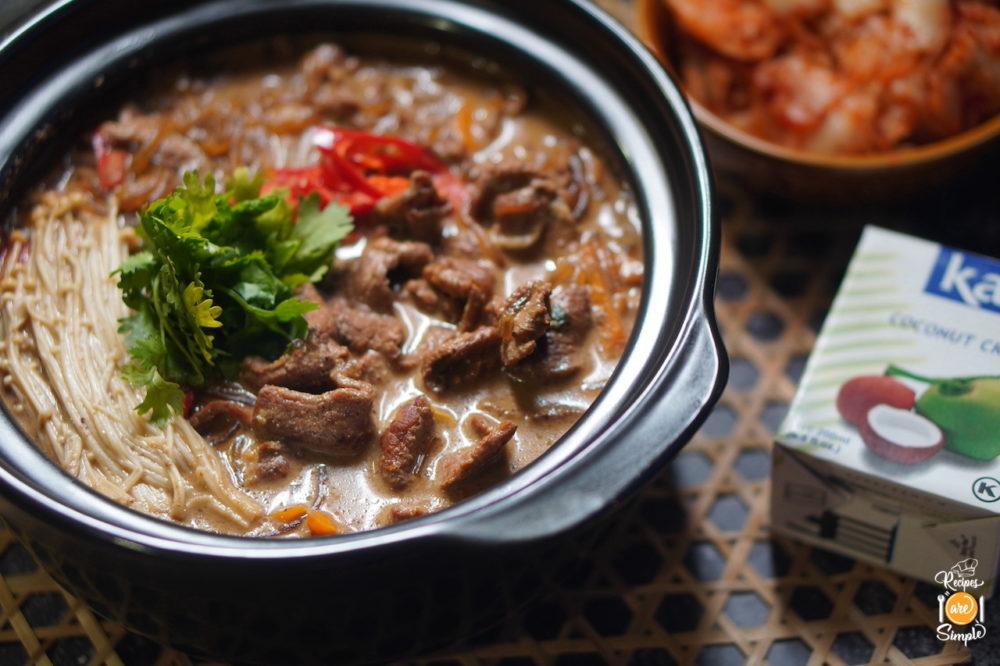
This bulgogi beef stew (Ttukbaegi Bulgogi)
takes your taste buds on a delightful adventure. Imagine the melt-in-your-mouth tenderness of bulgogi-marinated beef mingling with a rich, savory broth infused with the luscious sweetness of coconut cream. It’s a delicious combo of familiar Korean flavors with an intriguing tropical twist.
Bulgogi Beef Stew (with Coconut Cream)
® This is a RAS signature Recipe©
♦Prep time:10MIN ♦Cook time:30MIN ♦Yield: 4-5 Servings.
A detailed introduction and related links are available on the
Recipe Intro ↓ : Check it out or scroll down for the Recipe and Video⇓.

EAT AND TELL!!! Let us know if you tried– Bulgogi Beef Stew (with Coconut Cream)
| ♦Mail me your pics and testimonials 🙂 – recipesaresimple@gmail.com ♦If you make the dish and share it on your social media, please don‘t forget to tag me @recipesaresimple and hashtag it #recipesaresimple on any platform. ♥Please rate the recipe if you have tried it below ↓♦Quick Browse to see All Recipes by Category.♦World Cuisines to browse recipes by Country. ♥Thanks for visiting www.recipesaresimple.com |
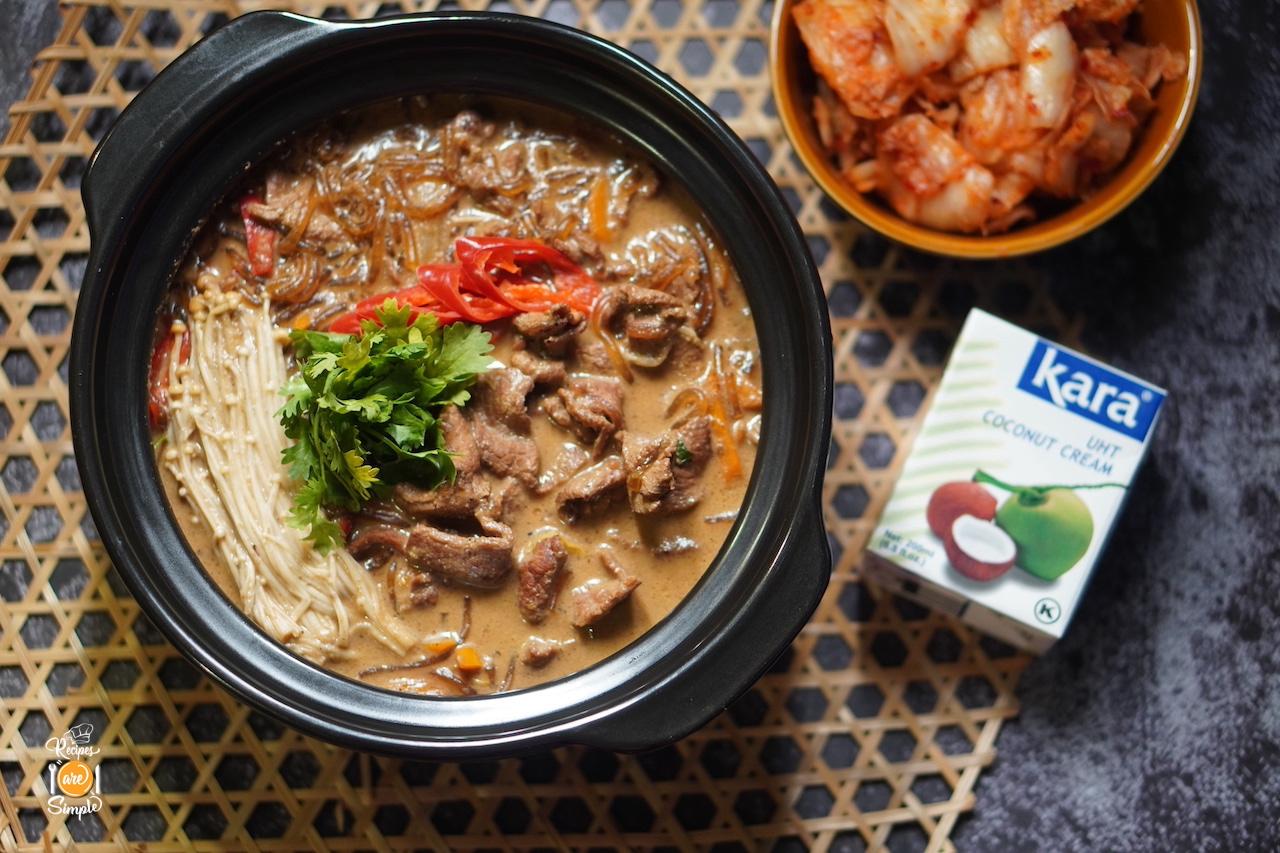
Bulgogi Beef Stew (with Coconut Cream)
Description
This Bulgogi Beef Stew (Ttukbaegi Bulgogi) is a soul-warming, "one-pot" Korean comfort dish. Unlike the dry, grilled Bulgogi BBQ, this version is served in a savory, slightly sweet broth, typically simmered in a traditional Korean earthenware pot (ttukbaegi). This recipe captures the essence of Seoul-style comfort food, combining thin beef with glassy sweet potato noodles and a variety of mushrooms that soak up the rich, beefy nectar. Here we also include an optional tropical twist.
Ingredients:
To Marinate Beef:
Instructions
-
Add the ingredients listed ' To marinate beef ' into a blender. Blend till smooth and add to a large bowl
-
Add the beef slices to the bowl and toss well to coat with the blended marinade.
-
Cover and marinate in the fridge for at least 4 hours or overnight.
-
Remove from the fridge and use a strainer to catch the marinating liquid in another bowl. Allow the beef to come to room temperature.
-
Also, soak the Korean glass noodles in a bowl of boiled (hot) water for 30 minutes to soften. Keep drained.
-
Hold together the cluster of enoki mushrooms on a chopping board and chop off the root section.
-
Gently separate mushrooms into sections and discard any noticeable dirt hidden inside. Rinse thoroughly and keep drained.
-
Chop up the cabbage and carrot also.
-
Take 6 cups of water to rinse out the marination bowl and add to a stock pot. Also, add the marinating liquid that has collected after straining the beef. Add 2 beef stock cubes and bring to a boil. Simmer for about 10 minutes. Remove any foamy scum that appears over the broth regularly.
-
Heat a heavy-based, large cast-iron pan or deep wok on a separate burner. You can also use large earthenware.
-
Once it is very hot, add oil and swirl the wok to coat the sides with oil. Add the marinated (drained) beef and spread it out over the surface of the wok. Allow the meat to get some 'browning' on it, for a couple of minutes. Then stir the beef around and repeat.
-
After about 6 minutes, the moisture will be absorbed. Stir-fry the beef for a minute. Now add the simmering stock and bring it back to a boil. Simmer for (5 minutes).
-
Check that the beef is tender.
-
Add 200 ml of Kara Coconut Cream (at room temperature). Reduce the heat and stir briskly to incorporate. Add black pepper and squeeze lime juice.
-
Once the coconut cream is mixed through, add the drained noodles, along with chopped cabbage, carrots, and chilies. Cover and simmer (5 minutes). The chilies will release a lovely flavor and aroma. You can add more to your liking after tasting. Also, add extra salt if needed.
-
Lastly, add the Enoki mushrooms and coriander leaves over the top. Cover and cook for another 3 minutes.
-
Your Bulgogi Beef stew is ready, but it needs to rest for at least 10 minutes for flavors to settle, and a good dash of Sesame oil over the top while serving. Serve with some Kimchi on the side as well as some steamed rice if desired. Enjoy your delicious Korea meets the Tropics meal!
Note
Korean pears, also called Asian pears, contain an enzyme called calpain. This enzyme breaks down proteins, which are the building blocks of muscle tissue in meat. When meat is marinated with Korean pear, the calpain helps to break down these tough protein strands, resulting in a more tender and flavorful final product.
- Flavor: While the calpain is responsible for tenderizing, Korean pears also add a subtle sweetness to marinades. This can be a desirable quality in many dishes.
- Substitutes: If you can't find Korean pears, other fruits like kiwi or pineapple can also be used as tenderizers due to their calpain content. However, these fruits have a higher concentration of the enzyme and can turn the meat mushy if marinated for too long. The flavor will also be different and stronger. Raw Papaya is also often used as a meat tenderizer in South Asian cuisine.

Korean glass noodles are a type of noodle made from sweet potato starch. They are known as dangmyeon (당면) in Korean. In their dry state, they look like long thin, stiff strands with a translucent, slightly greyish glass-like quality. Once cooked, they become chewy and slightly elastic with a neutral flavor. These noodles are a popular ingredient in many Korean dishes, especially: Japchae: A stir-fried dish featuring dangmyeon along with colorful vegetables, thinly sliced meat (often beef), and a savory-sweet sauce, and Soups and stews: Dangmyeon can also be added to soups and stews for a textural contrast and to soak up the flavorful broths. Cooking: Dangmyeon cooks quickly, especially after they have been soaked for 20-30 minutes. Versatility: While commonly used in Korean cuisine, these glass noodles can be incorporated into various dishes across Asian cuisines. If you're looking to explore Korean food or want to try a new type of noodle, Korean glass noodles are a great option!
Korean Chrysanthemum greens (Ssukgat) are often used in Korean stews. It has a herbaceous, floral, grassy, peppery, and bitter flavor profile. If you can not find it, use other fresh herbs. Pea sprouts may also be used. Mustard greens may be used. In our recipe, we use Fresh Coriander leaves, which are not found in Korean cooking. It goes well with this fusion recipe, offering a fresh scent for the coconut milk-infused stew. Similarly, celery leaves may be used if you prefer that.
Key Ingredients: Beef, Glass Noodles, Stock, Napa Cabbage, Enokki Mushroom, Carrot, Long Red Chillies, Korean Chrysanthemum greens (Ssukgat), Pepper, Lime, Sesame Oil(Marination: Asian Pear, Onion, Garlic, Ginger, Soy sauce, Sesame Oil, Sugar)