Gołąbki (pronounced “go-wump-kee”) is a beloved and iconic dish in Polish cuisine, though variations of stuffed cabbage rolls are found across Central and Eastern Europe, as well as parts of Western Asia and North Africa. The name “gołąbki” literally means “little pigeons” in Polish, referring to the shape of the rolled cabbage.
Origin: The exact origin of gołąbki is debated, but it’s widely believed to have emerged from the peasant classes in Central and Eastern European countries due to the widespread cultivation and affordability of cabbage in these regions. Early versions of the dish often featured fillings of buckwheat and potatoes, making them a hearty and economical meal. Some culinary historians also trace the ultimate origins of stuffed cabbage to ancient Armenia or Persia, where similar dishes like dolmeh felfel (stuffed bell peppers) were common. The dish likely spread through various cultures, adapting to local ingredients and preferences over time. In Poland, gołąbki became firmly established in the 19th century, possibly influenced by Ukrainian “hołubci.”
The Dish: Gołąbki are essentially cabbage leaves wrapped around a savory filling, typically simmered or baked in a flavorful sauce.

Typical Fillings:
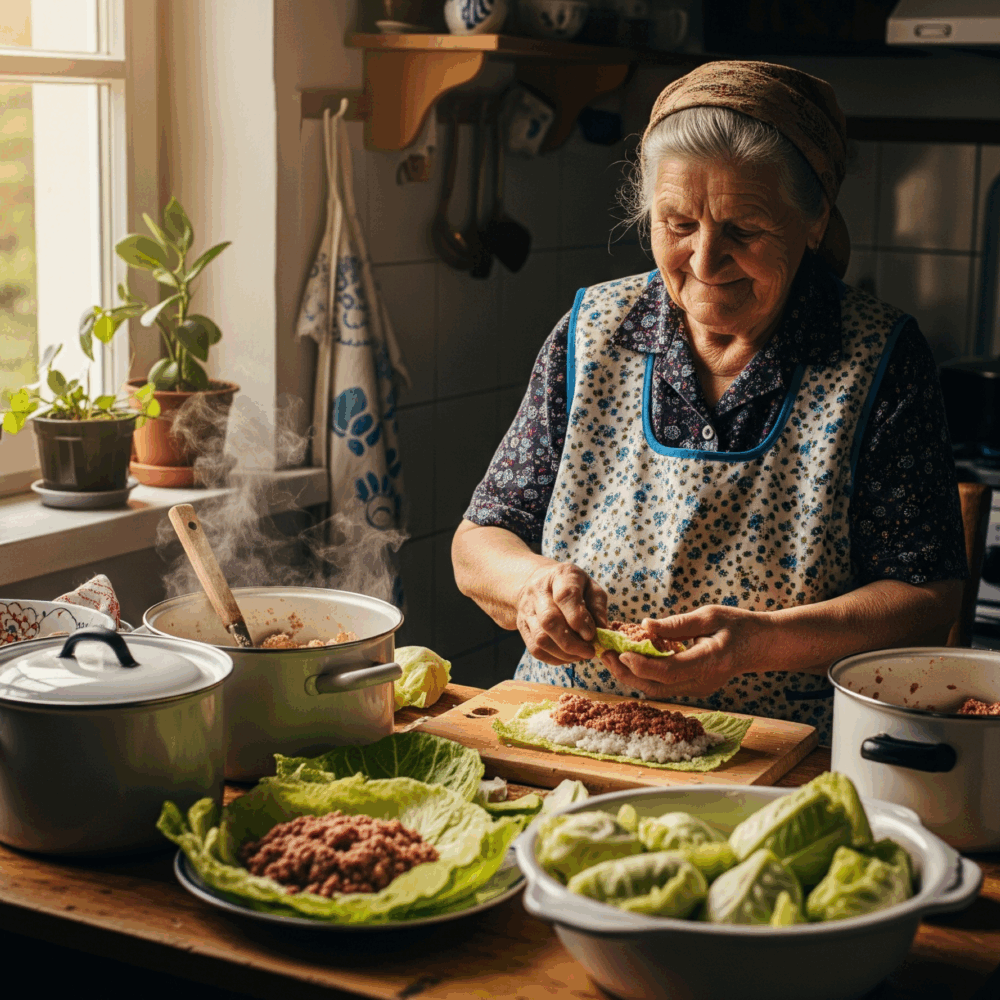
- Cabbage: The outer leaves of a head of cabbage (white or savoy cabbage is common) are blanched in boiling water until pliable enough to be easily removed and rolled without tearing. The thick, tough ribs of the leaves are often trimmed.
- Filling: The most common filling for gołąbki consists of:
- Ground meat: Usually a mixture of pork and/or beef, though poultry or mutton can also be used.
- Cooked rice or groats: Rice is very common today, but historically, buckwheat or barley groats were also used.
- Onions and garlic: Often sautéed before being mixed with the meat and rice.
- Seasonings: Salt, pepper, marjoram, and other herbs and spices.
- Assembly: A portion of the filling is placed on each softened cabbage leaf. The sides of the leaf are then folded inwards, and the leaf is rolled up tightly, creating a neat parcel.
- Cooking: The assembled gołąbki are snugly arranged in a pot or casserole dish. They are then gently simmered or baked in a liquid, most commonly a tomato-based sauce. Some variations use mushroom sauce or a simple broth. The slow cooking process allows the flavors to meld and the cabbage to become tender.
- Serving: Gołąbki are often served hot, sometimes with extra sauce, a dollop of sour cream, or alongside mashed potatoes. They are a comforting and hearty dish, enjoyed both for everyday meals and special occasions like holidays and family gatherings.
While the core concept remains the same, there are numerous regional and family variations in Poland and beyond, with differences in the type of cabbage (fresh or pickled), filling ingredients, and the accompanying sauce.
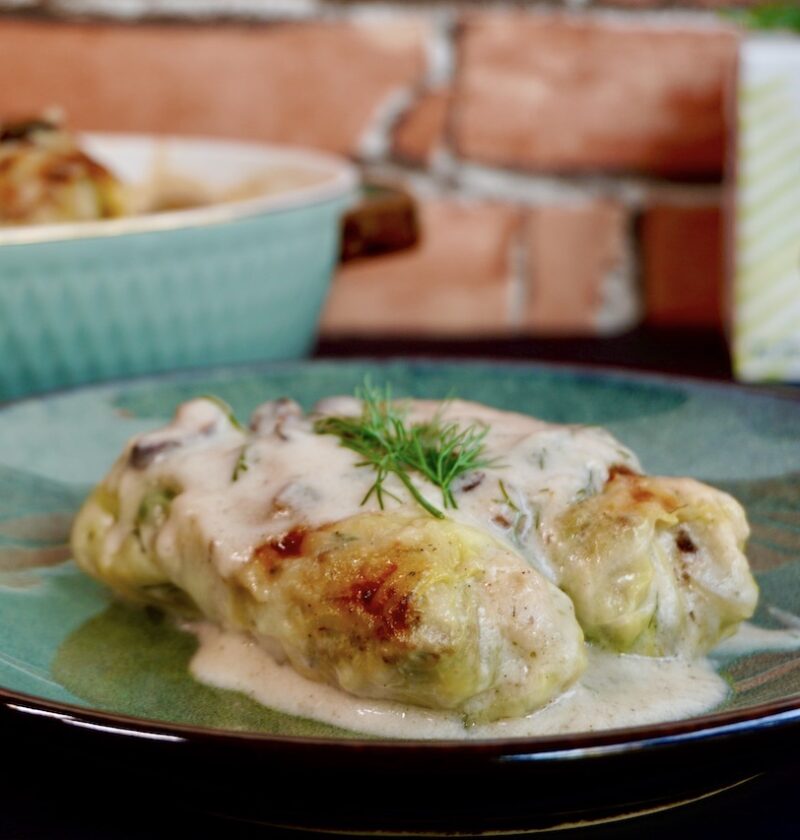
Today we are preparing Gołąbki in an unconventional but delicious way; in a savoury Coconut Mushroom Cream Sauce. Let me know if your Babcia approves!
Scroll down for the Complete Recipe.
Gołąbki in Coconut Mushroom Sauce
You are here: Quick Browse > Beef & Mutton > Gołąbki in Coconut Mushroom Sauce
Watch the Video or click to read Complete Recipe – Below.
How to make Polish Gołąbki in Coconut Mushroom Sauce – Recipe at a glance:
- Prepare the Cabbage Leaves (soften)
- Make the Filling
- Assemble the Rolls
- Make the Sauce
- Assemble the baking dish with Rolls and pour over the sauce.
- Bake the Golabki.
- Rest and Serve!
You might also like:
Ingredients:
- Cabbage & Filling:
- 1 large head cabbage
- 500g minced beef
- 3 tbsp olive oil
- 1 yellow onion, finely chopped
- 5 cloves garlic, minced
- 4 tsp dried tarragon
- 1 tsp black pepper
- 1 tsp salt
- ¾ cup raw long-grain rice, cooked and cooled
- 2 eggs, beaten
- 2 tbsp fresh parsley, chopped
- Sauce:
- 2 tbsp olive oil
- 1 tbsp butter
- 1¼ cups mushrooms, sliced
- ¼ cup flour
- 4 cups cabbage broth (from boiling cabbage)
- 200 ml coconut cream
- ½ tsp garlic powder
- ½ tsp pepper
- ½ tsp salt
- 2 tbsp dill (fresh or dried)
- 1 tbsp lemon juice
- Click below for full recipe

| ♦Mail me your pics and testimonials 🙂 – recipesaresimple@gmail.com ♦If you make the dish and share it on your social media please don‘t forget to tag me @recipesaresimple and hashtag it #recipesaresimple on any platform. ♥Please rate the recipe if you have tried it below ↓ |
♦Quick Browse to see All Recipes by Category. ♦World Cuisines to browse recipes by Regional Cuisine.
♥Thanks for visiting www.recipesaresimple.com